On this page
Finding the right car insurance in Taylorsville isn’t just about picking the lowest monthly payment you can find. It’s about lining up the right coverage at a total cost you can live with-and making sure you never go a single day uninsured while switching. This guide walks through exactly how to do that.
Key Takeaways
-
Utah’s minimum passenger-car auto liability limits are 30/65/25 (bodily injury per person/per accident/property damage), plus at least $3,000 per person in PIP medical benefits. These minimums often aren’t enough for Taylorsville drivers with assets to protect or newer vehicles.
-
The most important step when switching insurers is comparing full policy-term costs-not just monthly payments-and coordinating the exact start and cancellation times so there is no gap.
-
Construction detours, winter commutes, and I-215 traffic in Taylorsville all affect your real-world risk. Giving your agent accurate garaging, mileage, and vehicle-use information helps avoid denied claims later.
-
Utah Vehicle Insurance is an independent resource serving Taylorsville and surrounding areas. Start a quote request at utahvehicleinsurance.com/quote/ or call (844) 409-1313.
-
Specific street names or active construction projects don’t directly set your premium, but the overall driving environment is one more reason to carry adequate coverage.
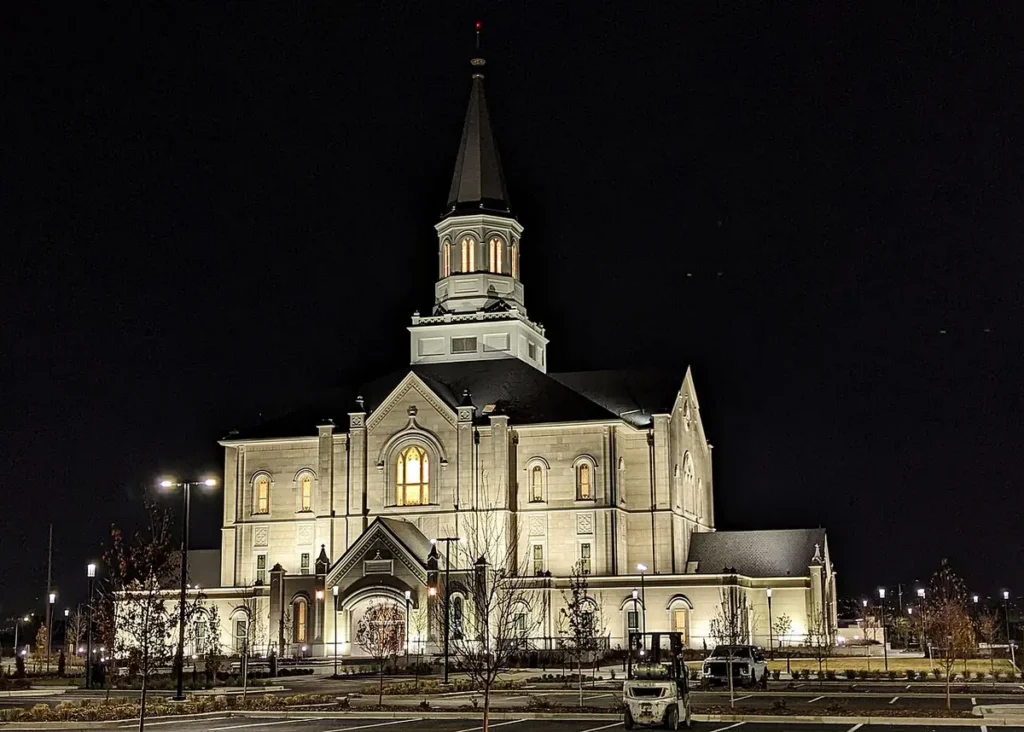

How Taylorsville Drivers Can Compare Car Insurance Without Gaps in Coverage
If you’re thinking about switching insurers to save money or get better protection, you’re not alone. Many Taylorsville drivers shop around every renewal cycle. The key is doing it carefully so you don’t accidentally end up uninsured-even for a single day.
A lower monthly quote can sometimes hide a higher total-term expense due to fees and coverage differences. Instead of comparing monthly payments alone, look at the six-month or twelve-month total premium, then add any installment fees, policy fees, or surcharges. Insurance policies in Utah typically run for a 6-month or 12-month term, so use that full window as your comparison frame.
Before you cancel an old policy, make sure the new one’s effective date is confirmed in writing. Confirm the new policy starts no later than the exact date and time the old policy ends, so there is no uninsured interval on Taylorsville roads or I-215.
Here’s what to have ready when requesting quotes:
-
VINs for each vehicle on the policy
-
Current liability limits and deductibles (from your declarations page)
-
Driver’s license numbers for every listed driver
-
Estimated annual mileage per vehicle
-
How each vehicle is used (commute, pleasure, business)
You can start a comparison through Utah Vehicle Insurance’s car insurance quotes page or call (844) 409-1313 if you’d rather talk through your options.
Utah Minimum Car Insurance Requirements for Taylorsville
Taylorsville drivers follow Utah state insurance rules. Laws can change, so it’s always worth confirming current requirements with the Utah Insurance Department or DMV.
As of January 1, 2025, Utah’s minimum passenger-car auto liability limits include:
-
$30,000 bodily injury per person
-
$65,000 bodily injury per accident
-
$25,000 property damage per accident
Utah generally requires insurance on registered passenger cars, including liability coverage and at least $3,000 per person in Personal Injury Protection (PIP) medical benefits. Passengers generally must use PIP first before pursuing certain claims against an at-fault driver’s liability coverage.
For a deeper breakdown of state-law details, visit the minimum car insurance resource rather than wading through legal code. Keep in mind that “state minimum” coverage is often not enough to replace a newer car or protect your assets in a serious multi-vehicle crash along busy Taylorsville corridors.
Understanding Coverage Types: From State Minimum to “Full Coverage”
“Full coverage” isn’t a legal term. In practice, it usually means liability plus collision and comprehensive. You can learn more about what that combination actually includes at Utah Vehicle Insurance’s full coverage page.
Here’s a plain-language rundown of the main coverage types:
-
Liability (Bodily Injury + Property Damage): Pays for injuries and damage you cause to others. The 30/65/25 minimums apply here.
-
Personal Injury Protection (PIP): Personal injury protection is available in Utah auto insurance and covers your own medical expenses up to at least $3,000 per person, regardless of who caused the crash.
-
Uninsured/Underinsured Motorist (UM/UIM): Covers you if the at-fault driver has no insurance or not enough. In Utah, new-policy UM/UIM defaults to the lesser of your liability limits or the insurer’s maximum unless you sign to lower or reject it. If purchased, UIM minimums are $10,000 per person and $20,000 per accident.
-
Collision: Collision coverage is optional in Utah auto insurance policies-it pays to repair your vehicle after a crash with another car or object, minus your deductible.
-
Comprehensive: Comprehensive coverage protects against non-collision damages like theft, hail, vandalism, or hitting an animal. Also optional under state law.
-
Add-ons: Roadside assistance, rental reimbursement, and gap insurance are common extras. Not required by law, but they can prevent expensive surprises.
Lenders and leasing companies typically require collision and comprehensive, but Utah law doesn’t mandate them simply because a vehicle is financed. That’s a contractual requirement from your lender, not a state statute.
Local Taylorsville Driving Conditions and Why Accurate Information Matters
Daily driving in Taylorsville means commuting toward Salt Lake City, navigating construction zones, and dealing with icy winter roads. These realities should inform how you set up your coverage-not just whether you meet state minimums.
The City of Taylorsville maintains a road construction resource page with a live traffic viewer and street maintenance maps showing current, planned, and past closures. Because construction schedules change frequently, always confirm current details on that site or through UDOT cameras before planning alternate routes.
More stop-and-go traffic, unexpected detours, and street parking near construction zones can change your real-world risk. That’s why it matters to tell your agent:
-
Where your vehicle is primarily garaged (your actual Taylorsville ZIP, not a friend’s address elsewhere)
-
Who regularly drives each vehicle in the household
-
How the vehicle is used-commuting, pleasure, business, rideshare, or delivery
Specific street names or a construction project don’t automatically change premiums by themselves. But accurate garaging and use information help prevent denied claims or mid-term re-rating surprises. Keep valid paper or electronic proof of insurance available to comply with Utah law whenever you’re behind the wheel.
Step‑by‑Step: Comparing Total Policy-Term Costs (Not Just Monthly Price)
Here’s how to compare policies side-by-side before pulling the trigger on a switch.
Gather your current declarations page. This single document shows your policy period, each coverage limit, each deductible, and the total premium for the full term. It’s your baseline.
Decide on your target limits and deductibles. Do you want to keep your current 30/65/25 or move to higher liability? What collision deductible makes sense for your budget?
Request quotes with matching limits. Drivers in Taylorsville should compare quotes on an equal basis with matching coverage limits. If one quote uses a $500 collision deductible and another uses $1,000, the comparison isn’t apples-to-apples. Drivers should match coverage limits and deductibles exactly when comparing car insurance quotes.
Look at total policy-term cost. Comparing total policy-term costs helps drivers avoid hidden fees and gaps in coverage. Compare quoted premiums and applicable fees, and check whether discounts are already included so you do not subtract them twice. Drivers should account for one-time and recurring fees in their total insurance costs, not just the sticker monthly number.
Review exclusions and usage restrictions. Some policies exclude delivery driving, rideshare, or business use. If those apply to you, a cheaper policy that excludes your actual use is worse than useless.
A hypothetical example using invented figures, not Taylorsville quotes or average rates: Suppose Maria in Taylorsville is comparing two six-month policies. Policy A charges $120 per month with a $500 collision deductible and includes rental reimbursement. Policy B is $100 per month with a $1,000 deductible and no rental coverage. Over six months, Policy A totals $720, and Policy B totals $600. But if Maria has one at-fault fender-bender and needs a rental car for a week, the extra $500 deductible plus $300 in rental costs makes Policy B more expensive in practice-even though the monthly payment looked better.
Quotes obtained through Utah Vehicle Insurance’s quote page or by phone are proposals only. Coverage is not bound until confirmed by the insurer.
How to Switch Car Insurance in Taylorsville Without a Lapse
Driving without required insurance in Utah can lead to fines, registration or license consequences, and potential SR-22 requirements. A crash during a coverage gap can leave you personally responsible for losses that insurance would otherwise cover.
Here’s how to switch cleanly:
-
Choose a new policy and confirm the effective date in writing. Requesting written confirmation of new policy activation prevents cancellation of the old policy too early.
-
Make the first payment or sign required documents so the policy can activate on schedule.
-
Confirm your lender is listed as loss payee on the new policy if your vehicle is financed.
-
Set the new policy to start on or before the day you cancel the old one. Verify the exact effective times with both insurers; matching calendar dates alone may not be enough.
-
Contact your previous insurer to cancel. Confirming the cancellation date with the previous insurer ensures proper timing during policy switches. Request written confirmation of the cancellation date.
Before I cancel, do I have: New ID cards? The same or better limits? Proof the lender is on the policy? Matching effective dates? Drivers should ensure their new policy meets Utah’s mandatory requirements to avoid penalties.
Utah’s Driver License Division (DLD) or DMV may verify continuous coverage when you register or renew. Lapses can trigger fines or require extra proof-of-insurance filings. If there’s a financed vehicle, a lapse could also prompt the lender to buy expensive force-placed coverage-making the overall cost far higher than careful switching would have.
Using a Simple Comparison Table to Evaluate Taylorsville Car Insurance Quotes
Organizing quotes into a single table makes differences easier to spot. All figures below are fictional illustrations, not current Taylorsville rates, quotes or recommended limits. Replace them with your own written quotes and compare equivalent policy periods:
|
Category |
Current Policy |
Quote A |
Quote B |
Quote C |
|---|---|---|---|---|
|
Policy term length |
6 months |
6 months |
6 months |
12 months |
|
Bodily Injury limits |
30/65 |
50/100 |
30/65 |
50/100 |
|
Property Damage limit |
$25,000 |
$50,000 |
$25,000 |
$50,000 |
|
PIP |
$3,000 |
$3,000 |
$3,000 |
$3,000 |
|
UM/UIM |
30/65 |
50/100 |
Waived |
50/100 |
|
Collision (deductible) |
$500 |
$500 |
$1,000 |
$500 |
|
Comprehensive (deductible) |
$500 |
$250 |
None |
$250 |
|
Rental reimbursement |
Yes |
Yes |
No |
Yes |
|
Roadside assistance |
No |
Yes |
No |
Yes |
|
Total policy-term premium |
$780 |
$860 |
$640 |
$1,550 |
|
Monthly equivalent |
$130 |
$143 |
$107 |
$129 |
|
Notable exclusions/notes |
– |
– |
No comp, no rental |
Annual term |
How to use this table: First, match liability and UM/UIM limits across columns so you’re comparing equal protection. Second, compare deductibles and included extras like rental or roadside. Third, focus on the total 6- or 12-month cost rather than just the lowest monthly line.
No table can replace reading the actual policy language. But it’s a powerful tool for spotting big differences before you choose which insurer to pursue further.
Special Situations: SR‑22, Non‑Owner Policies, and Occasional Drivers in Taylorsville
Some Taylorsville drivers face requirements beyond a standard policy. Here’s what to know about the most common special scenarios.
SR-22 filings. An SR-22 is a certificate completed by your insurer or agent showing required liability coverage. The insurer, agent or driver can submit the completed form to the Utah Driver License Division. SR-22 insurance is required for high-risk drivers in Utah-typically after certain serious violations or suspensions, not after a routine speeding ticket. Follow your DLD notice; the usual requirement is three years from the conviction date. A lapse can affect your driving privileges. For a deeper walkthrough, visit Utah Vehicle Insurance’s SR-22 page.
Non-owner policies. Non-owner car insurance is designed for eligible drivers who don’t own a vehicle but occasionally rent or borrow one that isn’t part of their household. It typically provides liability only-no collision or comprehensive for the vehicle itself-and isn’t appropriate for a car you own or have regular access to. It also won’t cover delivery or rideshare driving. More details are available on the non-owner insurance page.
Occasional drivers and household members. List all household members of driving age and regular drivers of each vehicle on your policy. Failing to disclose a regular driver-even one who only drives occasionally-could lead to surcharges, claim disputes, or policy cancellation. It’s always better to be upfront than to find out after an accident that coverage is denied.
Saving Money in Taylorsville Without Sacrificing Protection
The goal isn’t the absolute cheapest policy-it’s smart savings that balance premiums with enough protection so a single incident doesn’t derail your finances.
Here are realistic ways Taylorsville drivers might reduce total policy-term costs:
-
Adjust deductibles thoughtfully. Raising your collision deductible from $500 to $1,000 may lower your premium, but make sure you can actually cover that $1,000 if a claim happens.
-
Bundle auto with home or renters insurance if appropriate. Many insurers offer multi-policy discounts-just compare the bundled total against separate best-rate options.
-
Ask about mileage-based discounts if remote work or public transit means you’re driving fewer miles.
-
Maintain good payment history. Installment fees and late-payment charges quietly raise your effective term cost.
-
Take a defensive-driving course if your insurer recognizes it for a discount.
Discounts and eligibility always depend on insurer rules, so don’t assume any specific percentage off. Using accurate garaging and mileage information for your Taylorsville address-rather than guessing-helps produce more precise quotes and reduces mid-term premium adjustments.
For more cost-focused strategies, explore cheap car insurance options and enjoy the confidence that comes from knowing you haven’t cut corners on protection.
How Utah Vehicle Insurance Helps Taylorsville Drivers Compare Quotes
Drivers Insurance Agency, Inc., doing business as UtahVehicleInsurance.com, is an independent agency serving Taylorsville drivers. This is a service-area guide and does not claim a physical Taylorsville branch. An agent can compare available options from participating insurers, explain coverage differences and help you review the choices. Availability, pricing and eligibility depend on the insurer and applicant.
Here’s how the team works:
-
Start with a quick request at utahvehicleinsurance.com/quote/ or call (844) 409-1313.
-
The initial form asks for your name, phone, and email. After that, you can add optional details about vehicles and drivers.
-
An agent follows up to clarify coverage needs, gather any missing information, and present comparison options.
Quotes are for comparison and discussion-they do not bind coverage. No promises of the “cheapest” price, guaranteed savings, or instant coverage are made. Utah Vehicle Insurance is independent and not affiliated with the City of Taylorsville or the State of Utah.
Have your current policy documents handy so an agent can help mirror or improve limits in any new quotes. The same process works for drivers in neighboring communities; see our West Valley City car insurance guide for household and multi-car comparisons.
Frequently Asked Questions: Taylorsville Car Insurance
Does Taylorsville road construction directly raise my car insurance price?
Insurers don’t typically adjust premiums based on individual construction projects or specific street names. However, overall accident and claim patterns in an area can influence rates over time. Active road work does increase day-to-day risk through detours, debris, and congestion, which is a practical reason to maintain strong collision and comprehensive coverage. Use the city’s road-construction page and live traffic viewer to plan safer routes, and update your agent if your regular commute pattern changes significantly.
What if I move from Taylorsville to another Utah city in the middle of my policy term?
Notify your insurer or agent as soon as your garaging address changes, since location is a standard rating factor. The insurer may adjust your premium for the remainder of the term-up or down-but that’s better than carrying inaccurate information that could cause problems at claim time. Call Utah Vehicle Insurance to help update your address and check whether a different company might be a better fit for the new city.
How does PIP work if I’m in a minor crash in Taylorsville?
A Utah passenger-car policy generally includes at least $3,000 per person in PIP medical benefits, payable without regard to fault, subject to policy terms. Submit injury expenses to the appropriate PIP insurer first. Other injury claims depend on Utah law and the circumstances; exhausting PIP is not a universal prerequisite for every type of claim. Keep medical bills and accident reports organized, and review the Utah Insurance Department’s third-party claim guidance for official details on timelines and consumer rights.
Can I stop my car insurance if my vehicle will be parked for a few months?
A registered passenger car generally must remain insured even while parked. Comprehensive-only storage coverage does not satisfy Utah’s insurance requirements for a currently registered vehicle. Before reducing coverage, confirm registration status with DMV, lender requirements with your lender and any active SR-22 obligation with DLD. Ask your insurer which options fit the actual situation, and restore all required coverage before driving.
What should I do insurance‑wise after a crash with an out‑of‑state driver in Taylorsville?
Call 911 for an emergency. For routine reporting contacts, use the city’s police and fire contact directory. Collect the other driver’s insurance and contact information, and notify your own insurer promptly. Your coverage follows you throughout Utah and works the same in Taylorsville regardless of the other driver’s home state. For disputes or questions about third-party claims, review Utah Insurance Department consumer resources and work through your own insurer or agent for guidance.
Sources and Helpful Official Links
Here are official resources for the most current rules and claim guidance:
-
Utah Insurance Department – Auto Claim Consumer Page: insurance.utah.gov/consumers/auto/third-party-auto-claim/ – covers your rights, insurer response timelines, comparative negligence rules, and dispute options for third-party claims.
-
Utah DMV – Insurance and Registration: dmv.utah.gov/register/insurance/ – outlines proof-of-insurance requirements tied to vehicle registration.
-
Taylorsville Road Construction Information: taylorsvilleut.gov/services/road-construction – live traffic viewer, street maintenance maps, and current project updates.
-
Utah Driver License Division (DLD): dld.utah.gov – for license status, SR-22 requirement questions, and financial responsibility filing information.
Regulations and websites can change. Always check directly with these agencies or a qualified professional for the latest information. If you’d like help applying any of this to your own policy, contact Utah Vehicle Insurance at (844) 409-1313 or request a quote online.