On this page
If you live in Lehi, UT and drive a financed car to work every day, figuring out which coverages your lender demands versus what Utah actually requires can feel needlessly complicated. This guide breaks down the decisions that matter most for Lehi commuters: choosing the right liability limits, handling collision and comprehensive on a financed vehicle, and reporting your mileage and garaging address accurately so you aren’t overpaying or underinsured.
Key Takeaways
-
Utah Vehicle Insurance helps Lehi drivers compare auto insurance quotes online and by phone at (844) 409-1313. Quotes do not bind coverage-an agent follows up to finalize details.
-
Utah’s current minimum auto liability limits are 30/65/25 (bodily injury $30,000 per person / $65,000 per accident / $25,000 property damage) plus $3,000 Personal Injury Protection (PIP) per person, effective January 1, 2025.
-
Utah state law requires only liability and PIP. Your lender or leasing company-not the state-typically requires collision and comprehensive with a loss payee clause on financed vehicles.
-
Commuting mileage on I-15 and Timpanogos Highway is a key rating factor. Before requesting a quote, prepare a quick checklist: daily commute miles, your garaging address in Lehi, all listed household drivers, and whether your vehicle is financed or leased.
-
Drivers should request identical coverage limits when comparing insurance quotes from several companies to get a true apples-to-apples picture.
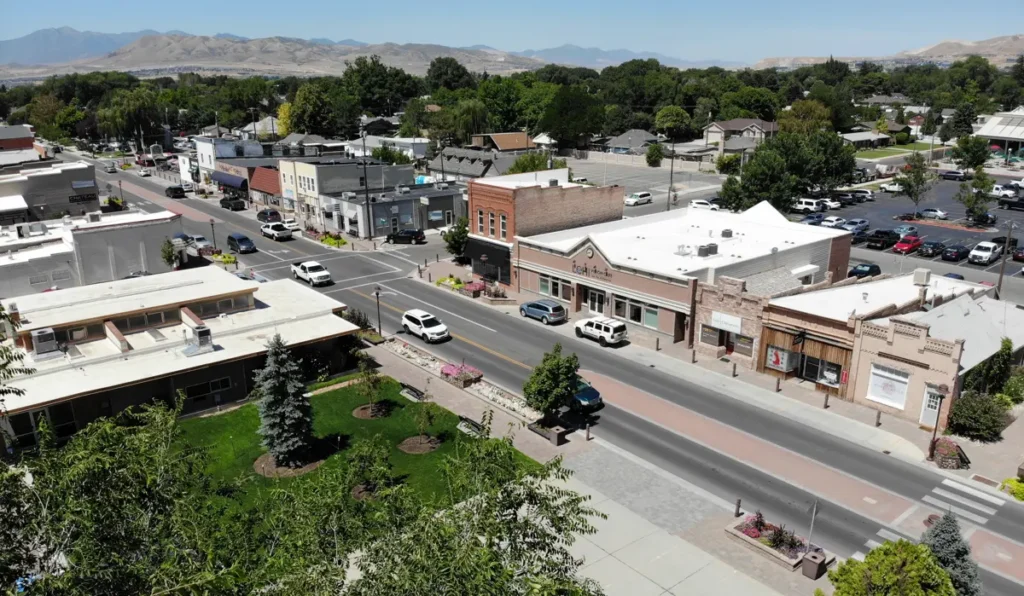

How Lehi Commuters Should Choose Auto Insurance
If you commute on I-15 or SR-92 (Timpanogos Highway) every weekday, you’ve probably heard the phrase “full coverage” without a clear definition. In practice, the coverage you need depends on three connected decisions.
First, pick liability limits that actually protect your assets. The state minimum of 30/65/25 is legal, but higher liability limits can better protect personal assets after an accident involving serious injuries or multiple vehicles. Second, decide on collision and comprehensive based on whether the car is financed and how much it’s worth. If a bank holds your title, you almost certainly need both. If the car is paid off and older, the math may point toward dropping physical damage coverage. Third, set realistic annual mileage and usage. Telling your insurer you use the car for “pleasure” when you’re actually commuting 30 miles round-trip daily on I-15 can cause claim problems down the road, and insurers also look at a driver’s age when setting premiums.
Hypothetical example: Imagine a driver living near Traverse Mountain in Lehi, financing a 2022 mid-size SUV, and commuting five days a week to the Silicon Slopes area. Their annual mileage might land around 12,000–15,000 miles. Because the vehicle is financed, the lender requires collision and comprehensive with a specified deductible and a loss payee listing. This driver would likely choose liability above state minimums, declare “commute” use, and carry UM/UIM at least equal to their liability limits.
Quotes from Utah Vehicle Insurance are for comparison only and do not guarantee pricing or eligibility. Start with the online quote form and then review commuting-mileage and financed-vehicle options with an agent.
Utah Minimum Car Insurance Requirements for Lehi Drivers
Lehi drivers follow the same statewide auto insurance rules as every other Utah resident. Utah’s minimum liability limits changed effective January 1, 2025, so it’s worth confirming your policy reflects the current numbers.
As of January 1, 2025, Utah’s liability limits are $30,000 per person for bodily injury, $65,000 per accident when two or more people are injured, and Utah’s minimum property damage liability is $25,000 per accident. Utah also requires a minimum of $3,000 in Personal Injury Protection per person.
In plain language: liability pays others when you are at fault-covering their medical bills and property repairs. PIP covers the first $3,000 of each injured person’s medical expenses under Utah’s no-fault system, regardless of who caused the crash. Utah is a no-fault state for car insurance, meaning injured occupants usually must exhaust PIP before pursuing certain bodily injury claims against the responsible driver. For a deeper walkthrough of statewide rules, read the minimum car insurance guide rather than wading through statute language.
Liability, PIP, UM/UIM, and How They Work in Utah
Many Lehi residents focus on the phrase “full coverage,” but your financial protection often hinges on three specific layers: liability, PIP, and uninsured/underinsured motorist coverage.
Bodily injury liability minimums in Utah are $30,000 per person and $65,000 per accident, while property damage liability in Utah has a minimum of $25,000 per accident. Consider a hypothetical fender-bender on Main Street in Lehi: if two people in the other car need emergency treatment and their bills top $30,000 each, the 30/65/25 minimums could be exhausted fast-leaving you personally responsible for the balance.
PIP’s $3,000 floor covers initial medical costs, but an ER visit followed by physical therapy can blow past that quickly, especially for drivers with limited health insurance. Ask for a quote with higher PIP medical limits, such as $10,000 where available, and compare the added premium and benefits for passengers and family members.
Uninsured/underinsured motorist coverage protects against drivers with inadequate insurance. Under Utah law, UM/UIM is written into new policies at the lesser of your liability limits or the insurer’s maximum unless you sign a written selection of lower limits or rejection. The purchased UIM minimum is $10,000 per person and $20,000 per accident. Lehi drivers who commute frequently on I-15 should consider higher liability and UM/UIM limits and connect with Utah Vehicle Insurance to discuss options.
Collision, Comprehensive, and Financed Cars in Lehi UT
Utah law does not require collision or comprehensive coverage on any vehicle. However, most lenders and leasing companies require both for financed vehicles-and that distinction trips up a lot of Lehi drivers.
Collision coverage pays for damage to your vehicle from an accident, whether you hit another car or a guardrail. Comprehensive coverage pays for non-collision events such as theft, fire, vandalism, hail, animal strikes, and weather damage.
The state of Utah only mandates liability and PIP, but a bank financing a car parked in Lehi can require you to carry collision and comprehensive with specific deductibles (often $500 or $1,000 maximum) and list them as a loss payee. This means any claim payout goes jointly to you and the lender.
Deductible trade-offs: A $500 deductible means lower out-of-pocket cost per claim but higher premiums. A $1,000 deductible lowers your premium but increases what you pay before insurance kicks in.
Consider two Lehi scenarios. A driver with a paid-off 2012 sedan used mainly for errands along State Street might reasonably drop collision and comprehensive, accepting the risk of replacing the car out of pocket. A driver with a newer financed SUV commuting daily on Timpanogos Highway almost certainly needs both, not because Utah law says so, but because the loan agreement does.
Commuting Mileage, Garaging in Lehi, and How Insurers Use This Info
Insurers use your garaging address-where the vehicle is parked overnight-and your annual mileage to help set rates. Living in Lehi versus a neighboring city, or parking in a quiet cul-de-sac versus near a busy intersection, can influence the premium your insurance company quotes.
On an auto policy application, “commute” means regular travel between home and work. “Pleasure” or “social” means occasional errands and weekend driving. “Business” may involve client visits or deliveries. Accurately describing a Lehi-to-Provo or Lehi-to-Salt Lake commute matters because misrepresentation can lead to claim denials or policy cancellation.
Utah insurers commonly ask for estimated annual mileage and commuting distance. A practical approach: track one week of driving or use a map tool to estimate your round-trip miles from your Lehi neighborhood to your workplace, then multiply by workdays per year.
Your car should be rated where it is normally parked overnight-say, a townhome near Lehi Main Street-not at a cheaper ZIP code belonging to a relative. Garaging honesty protects you at claim time.
If you’re about to switch to remote work or beginning a daily commute over the Point of the Mountain, mention that lifestyle change when requesting quotes so your agent can adjust usage and mileage accordingly.
Local Lehi Road & Winter Conditions: Why Coverage Choices Matter
Lehi City’s Streets Department manages road maintenance year-round and runs winter snow removal operations from roughly November 1 through April 30. With Utah Lake located just west of Lehi, local weather and road conditions can shift quickly. According to the Lehi City Streets Department, plowing is prioritized for main arterial roads and high-traffic or high-risk intersections. Subdivision streets, cul-de-sacs, and end streets aren’t plowed until about four inches of snow accumulates.
Residents are responsible for clearing driveways and sidewalks and may not push snow back into the street-a rule that affects visibility and vehicle maneuvering near parked cars during storms.
Winter conditions connect directly to coverage decisions. Comprehensive applies to non-collision losses like a tree limb falling onto your car during a storm, while collision applies to icy-road crashes. If you live on a hilly mountain neighborhood street or commute through Traverse Mountain in January, bare-minimum limits leave you exposed.
Practical winter tips: give plows plenty of space, reduce speed on hilly neighborhood streets, and check the city’s snow removal resources before major storms so you know which roads will be cleared first.
Optional Coverages Many Lehi Drivers Consider
Beyond liability, PIP, collision, and comprehensive, Lehi drivers can add several optional protections through Utah Vehicle Insurance depending on the carrier.
Common options include roadside assistance and towing, rental reimbursement after a covered claim, gap coverage for loans or leases (which may cover an eligible balance after a covered total loss, subject to limits and exclusions), custom equipment coverage, and windshield glass options where offered. Each insurer has its own rules for these add-ons, and Utah Vehicle Insurance can help compare options from multiple companies without promising the cheapest price.
Heavy commuters on I-15 or parents of teen drivers in Lehi may want to prioritize rental reimbursement and higher liability limits, and review exclusions carefully. Also consider how your health insurance interacts with PIP when choosing medical-related options-coordination rules vary by plan, so having both your health plan details and your auto policy in front of you helps.
Special Situations: SR-22 Filings and Non-Owner Policies
An SR-22 is not an insurance policy. It’s a financial-responsibility form that Utah’s Driver License Division (DLD) may require after certain serious violations or license suspensions-not after an ordinary speeding ticket.
When a Lehi driver is ordered to file an SR-22, their insurer or agent submits the form to the DLD. The DLD determines the required filing duration, which is often about three years. Utah Vehicle Insurance offers help finding auto insurance policies that include SR-22 filings where eligible-visit the SR-22 insurance page for more details.
A non-owner auto insurance policy provides liability coverage for someone who does not own a car, does not have regular access to a household vehicle, and only occasionally rents or borrows cars. It typically carries no collision or comprehensive coverage and usually does not cover delivery or rideshare driving. Non-owner policies are not appropriate if the driver keeps a vehicle at their Lehi address or regularly drives a family member’s car. Learn more at the non-owner insurance resource page.
Discounts and Ways Lehi Drivers Can Manage Costs
Utah Vehicle Insurance never guarantees the lowest price or specific savings, but there are practical ways Lehi residents can better insure a vehicle affordably by comparing rates and coverage choices.
Common discount categories include multi-car and multi-policy options (bundling homeowners and auto where available), safe-driver or accident-free status, telematics programs that may provide discounts based on driving behavior, good student discounts for eligible teen drivers at local high schools or colleges, and paid-in-full or EFT payment options.
A household with several vehicles or a changing commute can ask about multi-car discounts and usage-based programs. Compare complete policy-term prices from several insurers; savings and eligibility vary, and no percentage or dollar reduction is guaranteed.
|
Lehi driver situation |
Coverage to compare |
Detail to confirm |
|---|---|---|
|
Financed commuter vehicle |
Liability, PIP, collision, comprehensive and UM/UIM options |
Lender deductible limits, loss payee and actual commuting mileage |
|
Paid-off household car |
Required coverages and optional physical damage protection |
Vehicle value and ability to pay repairs or replacement |
|
New remote-work arrangement |
Same coverage choices with updated use and mileage |
Actual annual miles; do not assume a discount or drop required coverage |
Avoid reducing necessary coverages-like UM/UIM or collision on a still-valuable financed car-just to chase the cheapest rate. Balance protection and budget with agent guidance.
Compare offers through car insurance quotes or explore cost-conscious strategies.
How Utah Vehicle Insurance Helps Lehi Drivers Shop Coverage
Utah Vehicle Insurance is an independent resource serving Lehi and nearby communities like American Fork, Highland, and Alpine-not a government agency and not a physical Lehi branch office.
The quote process is straightforward: visitors start with basic details (name, phone, email) at the quote page, then optionally add information about vehicles, drivers, and current coverage. An agent from the team follows up by phone or email. Quotes are estimates based on information provided, do not bind coverage, and policies are subject to insurer underwriting, eligibility, and final terms.
Utah Vehicle Insurance can compare multiple Utah carriers and insurers for liability, PIP, collision, comprehensive, SR-22, and non-owner solutions. Drivers Insurance Agency, Inc., doing business as UtahVehicleInsurance.com, offers a way to compare available coverage from participating insurers in one place.
Call (844) 409-1313 for one-on-one help sorting out commuting mileage, financed-vehicle coverage, and appropriate deductibles.
Lehi Resources: Claims, Registration, and Local Safety Contacts
Knowing who to contact-police, city services, your insurer, or the DMV-makes post-accident steps smoother for Lehi drivers.
After an injury accident or significant property damage in Lehi, ensure safety first and contact local emergency services (Lehi Police or Fire) via 911 or the non-emergency numbers on the official Lehi City website. The Lehi Streets Department site provides road maintenance and winter operations information useful for storm-related travel planning.
The Utah Insurance Department auto claims page outlines the difference between first-party and third-party claims, basic response-time expectations from insurers, and comparative negligence rules. The Utah DMV registration page covers proof-of-insurance requirements when registering a vehicle or updating plates-consult that official site directly for current details. Utah is different from states like Florida in both its no-fault PIP structure and its registration verification system, so always check Utah-specific rules.
Frequently Asked Questions About Lehi Car Insurance
These FAQs address common questions specific to life and driving in Lehi that aren’t fully covered above. For personal situations, contact Utah Vehicle Insurance or click through to the quote page.
Do I need more than Utah’s minimum coverage if I just commute from Lehi to Draper on I-15?
While 30/65/25 with $3,000 PIP is legal, daily I-15 commuting can increase your exposure to multi-vehicle crashes where medical and property damage costs easily exceed minimums. Many commuters across America in high-traffic corridors consider higher liability and UM/UIM limits plus collision and comprehensive, especially if their vehicle would be hard to replace out of pocket. The “right” amount depends on your income, assets, car value, and risk tolerance-review commuter-friendly options with Utah Vehicle Insurance to find what fits your situation.
If my car is paid off, can I drop collision and comprehensive in Lehi?
Drivers with paid-off vehicles in Lehi are generally free under Utah law to remove collision and comprehensive since no lender requires them. The decision often depends on the car’s current market value compared to what you could afford to pay after a crash, theft, or hail damage. Ask an agent to walk through the likely claim payout versus the annual premium savings before going “liability only”-sometimes the numbers favor keeping coverage even on an older vehicle.
How does my health insurance affect the PIP coverage I choose in Utah?
Utah’s mandatory PIP pays the first $3,000 of each injured person’s accident-related medical bills before certain liability claims proceed, regardless of fault. Even drivers with strong health insurance might want more PIP to help cover deductibles, co-pays, and passengers who do not share the same health plan. Because health and auto policies coordinate differently from person to person, review PIP options with both your health plan information and an auto insurance professional.
What if I live in Lehi but my job sometimes takes me to neighboring cities like American Fork or Saratoga Springs?
Your policy is generally rated based on where your car is garaged overnight-your Lehi address-not the various nearby cities you visit for work or errands. Normal regional driving to communities like Highland, Alpine, or Saratoga Springs is expected and usually covered, as long as the mileage and use description on your application are accurate. If your business involves extensive client visits or deliveries, describe your routes and usage in detail when requesting quotes so your agent can qualify you for the right category.
Can Utah Vehicle Insurance help compare different car insurance companies in Lehi?
Utah Vehicle Insurance is an independent agency resource; available insurers and eligibility depend on your circumstances. The service focuses on helping Lehi customers compare legitimate auto insurance options from participating carriers based on coverage needs rather than a single brand name. If you’re curious about a particular insurer, mention that preference when you contact Utah Vehicle Insurance so an agent can explain available options and any limitations offered through the platform.
Sources and Further Reading
Local services: Lehi Police, Lehi Fire Department, and Utah Driver License Division offices. Use 911 for emergencies.
This article draws on several official resources for Utah and Lehi-specific information. The Utah Insurance Department’s auto consumer guidance page provides details on minimum coverage requirements, third-party claims processes, and comparative negligence rules. The Utah DMV vehicle registration and insurance page explains proof-of-insurance requirements and registration compliance. The Lehi City Streets Department page covers local road maintenance priorities, winter snow removal schedules, and resident responsibilities. Readers should always confirm current legal requirements directly with Utah state agencies or a licensed attorney, as laws and regulations can change. Utah Vehicle Insurance is independent and not affiliated with Utah government.