On this page
If you live in Salt Lake City, your daily drive likely involves some combination of I-15 merges, I-80 canyon approaches, downtown one-way streets, and winter weather that can turn any commute into an adventure. All of that affects what auto insurance coverage actually makes sense for you-not just what the state requires. This guide breaks down Utah’s legal minimums, explains each major coverage type, and connects them to real Salt Lake City driving conditions so you can make informed choices about your policy.
Key Takeaways
-
Utah liability minimums are 30/65/25 and minimum Personal Injury Protection (PIP) is $3,000 per person for policies issued on or after January 1, 2025. Many Salt Lake City drivers choose higher limits for better protection given the area’s traffic density and crash rates.
-
Daily driving in Salt Lake City-along I-15, I-80, downtown, Sugar House, the University of Utah area, and winter canyons-can influence what auto insurance coverage makes sense for your situation.
-
Liability, PIP, uninsured/underinsured motorist, collision, and comprehensive coverage each serve different purposes. Lenders (not Utah law) usually require collision and comprehensive when you have an auto loan.
-
SR-22 and non-owner policies are special situations with important limitations. Utah Vehicle Insurance offers resources on both at SR-22 Insurance and Non-Owner Insurance.
-
You can compare quotes with Utah Vehicle Insurance at utahvehicleinsurance.com/quote/ or by calling (844) 409-1313. Quotes do not bind coverage, and the agency is independent with no government affiliation.
How Salt Lake City Driving Affects Your Car Insurance
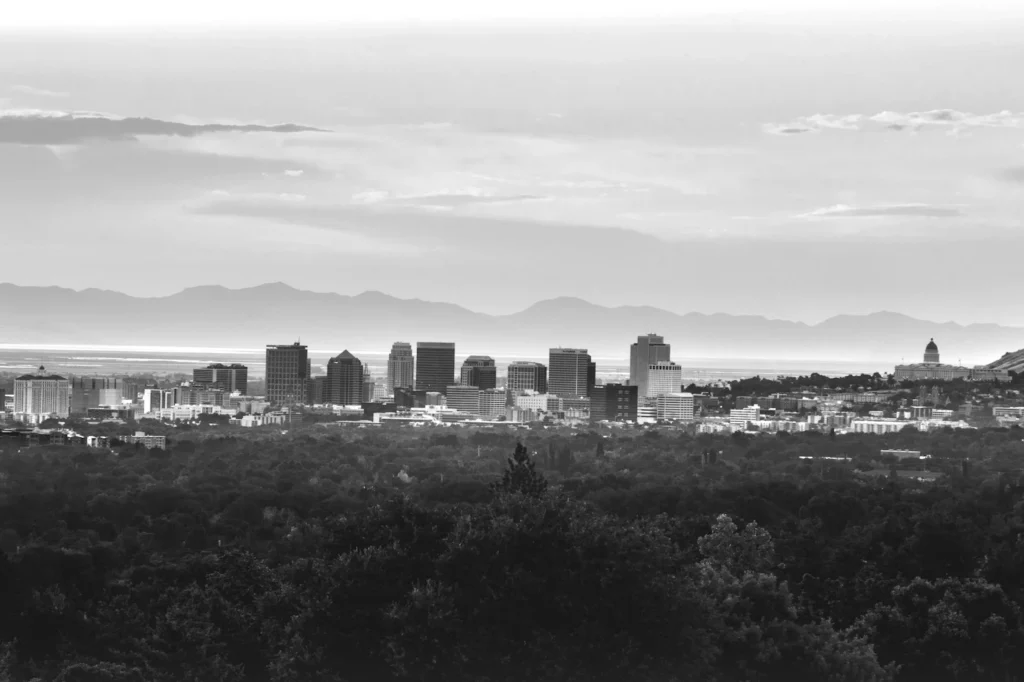
Salt Lake City sits at the crossroads of I-15 and I-80, two of Utah’s busiest corridors. Add I-215 airport runs, the tight downtown grid with its one-way streets, Sugar House congestion around 2100 South, and University of Utah traffic spilling down Foothill Drive, and you have an urban environment where car insurance premiums in Salt Lake City can vary significantly due to traffic density.
Freeway commuting risk. Daily commuting on I-15 and I-80 during rush hours-especially near the Spaghetti Bowl interchange-puts you in prime territory for rear-end and chain-reaction collisions. According to Utah Highway Safety data, urban Utah crash rates reached roughly 197.7 per 100 million vehicle miles traveled in 2023, nearly double the rural rate. That higher exposure is one reason frequent commuters often carry liability limits well above the state minimum, along with collision and UM/UIM coverage.
Downtown parking concerns. Dense downtown and Central City parking-garages near City Creek Center, street parking around Capitol Hill and the Depot District-raises concerns about fender-benders, hit-and-run incidents, and vandalism. These risks tie directly to your collision and comprehensive coverage choices.
Sugar House and 9th & 9th. Narrow residential streets, cyclists, and heavy pedestrian foot traffic in these neighborhoods create bodily injury liability exposure that makes adequate liability and PIP coverage especially important for residents who live or drive through these areas regularly.
Winter canyon driving. Heading east on I-80 toward Parleys Canyon, or up Big Cottonwood and Little Cottonwood Canyons, introduces snow, ice, and road salt into the equation. Single-vehicle slides into guardrails and windshield chips from debris can lead to collision or comprehensive claims, depending on the damage and policy. Gradual salt corrosion, rust, and normal wear are generally excluded.
Garaging address matters. Insurers typically rate your policy using the garaging address-where the vehicle actually stays overnight-not just your mailing address. If you live in Rose Park but garage the car at a family member’s place in West Valley, the insurer needs the actual overnight location. Misrepresenting this can lead to claim denials or policy cancellation.
Utah Minimum Car Insurance Requirements for Salt Lake City Drivers
Utah sets statewide minimum auto insurance requirements that apply equally whether you live downtown or in the suburbs. These limits changed for policies issued or renewed on or after January 1, 2025.
The current required liability minimums are:
-
$30,000 bodily injury per person
-
$65,000 total bodily injury per accident
-
$25,000 property damage per accident
This 30/65/25 structure replaced the prior requirement of 25/65/15, meaning Utah requires at least $25,000 in property damage liability coverage. Utah also mandates $3,000 in Personal Injury Protection (PIP) medical benefits per person-the minimum no-fault medical coverage a standard personal auto policy must include.
These are legal minimums, not recommendations. Consider a downtown rear-end crash where two people need emergency care and the other driver’s vehicle needs significant body work. Hospital bills and repair costs can exceed minimum limits quickly, leaving you personally responsible for the difference.
It is illegal to drive without car insurance in Utah. Penalties include fines starting at $400 for a first offense, potential license suspension, and registration revocation through Utah’s Insure-Rite verification system. For more detail on minimum requirements, visit our Minimum Car Insurance page.
Utah Vehicle Insurance bases this article on information available as of 2026, but requirements can change. Always verify current legal minimums through official Utah sources.
Understanding Key Salt Lake City Auto Insurance Coverages
Here is a practical breakdown of the major coverages on a typical Salt Lake City auto insurance policy.
Bodily injury and property damage liability protects you financially if you are at fault for injuries or damage to others. Think of a rear-end collision on I-15 or a parking mishap near City Creek Center-your liability coverage responds to the other party’s claims against you.
Personal Injury Protection (PIP) is Utah’s no-fault medical coverage. PIP helps pay your own medical expenses and those of certain passengers regardless of who caused the accident, up to the policy limit. The Personal Injury Protection coverage minimum is $3,000 per person.
Collision coverage pays for damage to your vehicle after an accident-whether you slide into a guardrail on I-80 during a snowstorm or back into a concrete post in a downtown garage. Lenders typically require it if your car is financed or leased.
Comprehensive coverage helps protect your vehicle against non-collision incidents like theft, vandalism, fire, glass breakage, hail, or hitting an animal. A common Salt Lake City example: windshield damage from winter road debris kicked up on I-215.
Uninsured and underinsured motorist (UM/UIM) coverage responds when you’re struck by a driver with no insurance or insufficient insurance. Picture being hit at a 400 South intersection by an uninsured driver-without UM/UIM, injury costs beyond PIP and other available coverage may remain unpaid. Utah insurers must offer this coverage, though you can decline it in writing.
Optional extras many Salt Lake City drivers consider include towing and labor, rental reimbursement while a vehicle is in the shop after a covered claim, and roadside assistance for canyon or freeway breakdowns.
Salt Lake City, Utah and No-Fault (PIP) Rules
Utah is a no-fault insurance state for auto accidents. This means Salt Lake City drivers must carry PIP on their Utah policies.
Utah law requires at least $3,000 in PIP medical benefits per person. This coverage typically applies to the insured driver, most household members, and passengers, subject to policy terms.
After a typical Salt Lake fender-bender, here is what usually happens:
-
Your PIP coverage pays initial medical bills regardless of who was at fault
-
If injuries are minor and within PIP limits, the process may end there
-
If injuries are severe enough or medical costs exceed certain legal thresholds, the injured person may pursue a liability claim against the at-fault driver
Utah is a no-fault state for auto insurance, but that does not mean fault never matters. When injuries cross the state’s severity threshold, the standard fault-based system kicks in for additional claims.
Many Salt Lake City families consider higher PIP limits than the minimum, especially if they frequently drive on busy interstates, have children commuting to the University of Utah, or travel to ski resorts through canyon roads.
“Full Coverage” vs. State Minimum in Salt Lake City
“Full coverage” is an informal phrase you will hear from Salt Lake drivers and dealers. There is no official “full coverage” policy in Utah law.
What people usually mean is a policy that includes liability, PIP, collision, and comprehensive coverage, often with UM/UIM. Insurify’s Utah cost table, updated September 30, 2026, estimates Salt Lake City car insurance at about $164 per month for full coverage and $102 per month for liability-only coverage. The liability-only figure is not a verified quote for a Utah minimum-limit policy including PIP. The table does not specify exact limits or deductibles. These third-party estimates are not agency quotes or guaranteed prices; actual rates depend on your driving record, vehicle, coverage, and other factors. See Insurify’s cost estimates and methodology.
A state-minimum-only policy includes just liability and required PIP. This might suit someone driving an older paid-off car in Glendale or Rose Park who can afford to replace it out of pocket.
Here is the practical difference: if you carry only liability and PIP and cause a crash on I-215, you pay out of pocket to repair or replace your own vehicle. A driver with collision coverage could file a claim, subject to the deductible.
When deciding how much coverage to carry, consider your vehicle value, loan or lease obligations, where you park overnight (street vs. garage), and how often you drive in heavy Salt Lake traffic. Visit our Full Coverage page for a deeper look.
SR-22 and High-Risk Car Insurance in Salt Lake City
An SR-22 in Utah is a certificate some drivers must file to prove they carry at least the state-required auto liability insurance. This filing goes to the Utah Driver License Division (DLD).
An SR-22 is not a separate policy-it is a filing attached to an existing auto policy or certain non-owner policies. Utah Vehicle Insurance can help Salt Lake City drivers explore SR-22 options without promising acceptance or eligibility.
In Utah, the SR-22 requirement typically lasts three years from conviction; the dates and duration in your DLD notice control. Always follow your official DLD documentation for exact timeframes.
Common Utah reasons an SR-22 might be required include:
-
Qualifying financial-responsibility violations or an unpaid accident judgment
-
Being convicted for driving without insurance
-
Operating an uninsured vehicle involved in an accident
Ordinary speeding tickets by themselves do not automatically require an SR-22. If you receive a notice about an SR-22 requirement, contact Utah Vehicle Insurance or check the official DLD site, and review our SR-22 Insurance page.
Non-Owner Car Insurance for Salt Lake City Drivers
Non-owner car insurance is a possible option for Salt Lake City residents who do not own a vehicle but occasionally drive borrowed or rented cars, or who need to maintain continuous coverage for licensing reasons.
Non-owner policies in Utah typically provide liability coverage when driving vehicles not owned by the insured. They usually do not include collision or comprehensive coverage for the car itself.
Important limitations to understand:
-
Non-owner policies generally do not cover vehicles available for your regular use (like a company car kept at home)
-
They are not designed for people who actually own or regularly control a vehicle
-
Coverage details and eligibility depend on the insurer and current Utah rules
Some Salt Lake residents use non-owner policies to meet SR-22 filing requirements when they do not currently own a vehicle. For more detail, visit our Non-Owner Insurance page and then request a personalized quote.
Salt Lake City Car Insurance, Property Insurance, and Business Insurance Together
While this guide focuses on auto insurance in Salt Lake City, many residents and business owners also need home or property insurance and business insurance. All of these can affect your overall protection and budget.
Bundling auto insurance with homeowners or renters insurance typically provides discounts through participating insurers. Bundling insurance policies can lower overall costs, making it worth asking about when you request quotes. A Salt Lake homeowner combining auto and home policies through one agency may find multi-policy savings where available.
Property insurance-whether for a home, condo, or renters coverage-protects the structure and belongings, while auto insurance covers vehicles and driving-related liability. Both matter if, for example, your car is stolen from your garage or damaged by a fire that also affects your home.
An independent agency can help Salt Lake City drivers compare available coverage options and understand differences in limits, deductibles, and exclusions. Business insurance needs in the Salt Lake area-like coverage for small shops downtown, contractors driving to Sugar House job sites, or companies with commercial autos-often involve commercial auto and general liability alongside personal auto coverage.
Utah Vehicle Insurance is an independent agency helping Utah drivers explore auto insurance options without guaranteeing discounts or endorsing specific insurers.
Local Salt Lake City Driving Risks and Insurance Tips
Understanding specific Salt Lake City risks helps you choose more appropriate auto insurance coverage and limits.
Freeway patterns. I-15, I-80, and I-215 carry heavy volumes daily. Lane changes near the Spaghetti Bowl interchange and traffic to and from Salt Lake City International Airport create consistent accident exposure, supporting higher liability and UM/UIM recommendations.
Urban event traffic. Downtown events at the Delta Center, Eccles Theater, and University of Utah games lead to crowded streets, more pedestrians, and potential accidents in The Avenues and Capitol Hill areas. Nearly 47% of Utah crashes occur at intersections, and event-day congestion amplifies that risk.
Seasonal hazards. Winter storms affect visibility on SR-201 and I-80. Snowplow and road salt damage can chip windshields and corrode paint. Spring runoff and thunderstorms occasionally cause localized flooding in lower-elevation neighborhoods.
Practical tips for Salt Lake City drivers:
-
Consider lower deductibles if you park on the street in central Salt Lake
-
Review comprehensive coverage if auto theft or vandalism is a concern where you park
-
Update your garaging address whenever you move from one Salt Lake neighborhood to another
-
Maintaining a clean driving record can yield better insurance rates
-
Improving your credit score can impact your car insurance rates positively
-
Safe driving discounts may reduce premiums; eligibility and savings vary by insurer
-
Utah drivers can qualify for various insurance discounts, and maximizing discounts is a priority for Utah insurance agencies
-
Online purchase discounts are available for car insurance through many carriers
How to Compare Salt Lake City Auto Insurance Quotes
Comparing car insurance quotes in Salt Lake City involves more than picking the lowest number. Coverage, limits, and deductibles should be evaluated side by side.
Gather this information before requesting quotes:
-
Vehicle identification number (VIN)
-
Current odometer reading
-
Garaging address within Salt Lake City
-
Lienholder information if any
-
Current coverage details including liability limits and deductibles
What to look for in a comparison:
-
Same liability limits (e.g., 100/300/100) across quotes
-
Same PIP level
-
Same UM/UIM limits
-
Matching collision and comprehensive deductibles
When differences in price reflect real differences in coverage rather than just lower limits, you can make an informed choice about whether each policy works for your driving habits, budget, and coverage priorities.
Think about how often you drive on freeways, where you park near home and work, and whether anyone in the household drives to the University of Utah, Salt Lake Community College, or downtown campuses. These factors should guide which limits you select.
Get a Quote through Utah Vehicle Insurance to request and compare Utah auto insurance options, or call (844) 409-1313. Quotes are estimates only and do not bind coverage until confirmed with the insurer.
Helpful Salt Lake City and Utah Resources After a Crash
Knowing who to contact after a collision in Salt Lake City can reduce stress and help claims go more smoothly.
-
Salt Lake City Police Department: For reportable accidents, reach SLCPD’s contact page for non-emergency options and services
-
Salt Lake City Fire Department: Serious crashes, fires, and hazardous conditions may involve SLCFD. Visit fire.slc.gov for information about their services
-
Utah Driver License Division (DLD): The DLD handles Utah driver licenses and many functions people sometimes associate with the DMV. Use the official DLD site to find office locations and check license-related requirements. Note that DMV registration is handled separately through Utah’s motor vehicle system
-
Your insurer or agent: Contact your insurance company promptly after a crash. Utah Vehicle Insurance can help guide existing and prospective clients through next steps according to the terms of their policies
How Utah Vehicle Insurance Helps Salt Lake City Drivers
Utah Vehicle Insurance is an independent resource for Salt Lake City and Utah drivers looking to understand and compare auto insurance options. The business is not affiliated with Utah state or local government.
As an independent agency, Utah Vehicle Insurance can request quotes from multiple participating insurers for Utah drivers, including Salt Lake City residents. Utah drivers benefit from using local independent insurance agencies for quotes because local agencies can shop multiple insurance companies for clients. Personalized service is a key feature of local insurance agencies, and local agencies understand unique risks associated with Utah living. The agency’s desire is to help build long-term client relationships through clear guidance and quote comparisons.
The agency’s focus areas include Utah liability requirements, PIP, collision and comprehensive coverage, UM/UIM, SR-22 filings, non-owner coverage, and guidance for drivers in neighborhoods from Sugar House to Rose Park.
Request a quote online at utahvehicleinsurance.com/quote/ or call (844) 409-1313 for personal assistance. Discussions and quotes do not bind coverage-final terms come from the issuing insurer.
For more on specific topics, explore these pages:
Salt Lake City Car Insurance FAQs
Do I need different car insurance if I commute daily on I-15 and I-80?
Utah’s legal minimums are the same across the state. However, frequent freeway commuting in Salt Lake City often makes higher liability, UM/UIM, and sometimes lower collision deductibles more practical. Higher speeds and heavier traffic increase both the likelihood and severity of accidents compared to neighborhood-only driving.
Does my Salt Lake City ZIP code really affect my auto insurance rate?
Yes. Insurers typically price policies using the vehicle’s primary garaging location, often down to the ZIP code or smaller territory. Differences in traffic volume, historical claim frequency, and rates of theft or vandalism by area can all influence what you pay. A downtown ZIP code generally carries different risk characteristics than a suburban one.
Is my car covered when I drive up Big Cottonwood or Little Cottonwood Canyon?
Standard Utah auto policies generally follow the car throughout the state, including canyon roads. However, what is actually covered depends on which options you purchased. Liability-only coverage would not pay for damage to your own vehicle if you slide off an icy canyon road-you would need collision coverage for that. Always confirm specifics with your own policy documents.
What happens if a visiting relative drives my car in Salt Lake City?
Many Utah auto policies provide coverage when a permissive driver uses the insured’s vehicle. The exact rules and any restrictions depend on the policy language. Some policies exclude certain drivers or limit coverage for occasional users. Review your contract or contact your agent before lending your car.
Where can I learn more about Utah’s official auto insurance and licensing rules?
Consult official Utah government resources such as the Utah Driver License Division and the state’s insurance regulatory sites for up-to-date laws and procedures. Utah Vehicle Insurance offers general guidance and helps you find and compare coverage, but does not set or enforce state rules.