On this page
If you live in Spanish Fork, Utah, there’s a good chance your driveway has a pickup next to a family sedan, and maybe a camp trailer parked along the fence. Figuring out car insurance for that kind of mixed household is not the same as covering a single commuter car. This guide walks through the practical reasons coverage needs differ for pickups, trailers, and everyday vehicles, how work use changes the equation, and what Spanish Fork drivers should ask before choosing a policy.
Key Takeaways
-
Utah minimum car insurance for passenger vehicles is 30/65/25 liability plus $3,000 Personal Injury Protection (PIP) per person. Many Spanish Fork families choose higher limits for better protection of their home, savings, and income.
-
Financing a truck or SUV in Utah does not automatically require “full coverage” by state law. Lenders typically require collision and comprehensive coverage in the loan contract, which is a separate obligation.
-
Local Spanish Fork driving conditions-Main St/US-6, roundabouts, school zones-and your true vehicle use (commute, farm, light business) should be discussed honestly with your insurance agent to keep coverage accurate.
-
Personal auto insurance usually handles liability while towing, but may not cover physical damage to every trailer or tools in the bed. Heavier or business-use towing can sometimes require commercial coverage.
-
You can compare Spanish Fork auto insurance options with Utah Vehicle Insurance at (844) 409-1313 or through the online quote form. Quotes do not bind coverage, and prices or eligibility are never guaranteed.
How Spanish Fork Drivers Can Compare Car Insurance Quickly
Whether you live in Spanish Fork proper, or nearby in Springville or Payson, comparing auto insurance works best when you come prepared. Here are the steps that save time and lead to clearer options:
-
Pull your current policy declarations page so you know exactly what you carry today.
-
List every driver in your household, including teens with learner permits.
-
Gather VINs for each vehicle you want to insure-pickups, sedans, SUVs.
-
Estimate annual mileage for each vehicle separately.
-
Write down how each vehicle is actually used: daily commute, pleasure, farm chores, light business, towing a camp trailer or utility trailer.
-
Note any trailers you own-type, approximate value, and how often you use them.
Utah Vehicle Insurance offers comparisons for Spanish Fork residents by phone at (844) 409-1313 or through the secure quote form. The form starts with your name, phone, and email, then lets you add household and vehicle details after initial contact. An agent follows up-no coverage is bound, and no price is promised in advance.
The rest of this page focuses on the question many locals have: “How do I cover my pickup, my spouse’s car, and the trailer we pull around town?”

Utah Car Insurance Basics Every Spanish Fork Driver Should Know
Here is a quick summary of core Utah requirements for passenger vehicles as of January 1, 2025. Always verify current law using official Utah sources.
-
Liability minimums: At least $30,000 bodily injury per person, $65,000 per accident, and $25,000 property damage (30/65/25). These limits increased from the previous 25/65/15 under Utah HB 113.
-
Personal Injury Protection (PIP): At least $3,000 in medical benefits per person is required on passenger-car policies. PIP pays initial medical bills for vehicle occupants after a crash before certain bodily injury claims can proceed.
-
Uninsured/Underinsured Motorist (UM/UIM): For new policies, UM/UIM defaults to the lesser of your liability limits or the insurer’s maximum, unless you sign for lower limits or rejection. If UIM is purchased, Utah requires at least $10,000 per person / $20,000 per accident.
-
Collision and comprehensive: The state of Utah does not require these coverages. However, if you finance or lease a vehicle, your lender almost certainly requires both in the loan contract.
For a deeper walk-through, visit the Minimum Car Insurance Guide on our site.
Pickups vs. Family Cars: How Coverage Needs Differ
Many Spanish Fork households run a mix: a half-ton pickup for hauling and a smaller car or minivan for commuting and errands. The right coverage for each vehicle is not identical.
Common pickup uses locally:
-
Towing camp trailers up Spanish Fork Canyon
-
Hauling construction materials, yard waste, or small farm equipment
-
Light work use around Utah County
-
Aftermarket accessories (lift kits, toolboxes, bumpers) that raise replacement cost
Typical family car uses:
-
School runs along local streets
-
Commuting on Main St/US-6 or into Provo
-
Errands and teen practice driving
Coverage considerations for pickups:
-
Higher physical damage values due to aftermarket parts
-
Potentially higher liability limits if towing or carrying passengers frequently
-
Usage classification (personal vs. business) directly affects rating
Coverage considerations for sedans/minivans:
-
Medical and liability protection for multiple occupants
-
Glass claims from road debris
-
Balancing deductibles to save money on premiums while keeping out-of-pocket risk manageable
Tell your insurance agent exactly which vehicles are pickups, their gross vehicle weight rating if you know it, and how often each is used for work versus personal errands.
Trailers, Tools, and Towing: What Personal Auto Insurance Usually Does-and Doesn’t-Cover
Many Spanish Fork residents tow camp trailers, enclosed cargo trailers, and utility trailers with their pickups or SUVs. Assumptions about coverage can be costly.
Here is what you should know:
-
Liability while towing: Personal auto policies often extend liability coverage while you are legally towing a trailer listed on or covered by the policy. This means if you cause a crash while towing, the liability portion typically applies.
-
Physical damage to the trailer: Liability coverage does not automatically mean your trailer’s physical damage is covered. Camp trailers, horse trailers, and cargo trailers often need to be specifically listed or endorsed for physical damage protection.
-
Tools and equipment: Items in the truck bed or trailer-power tools, building materials, farm equipment-are commonly not covered under auto physical damage. They may need a separate property, inland marine, or business policy.
-
When commercial coverage may be needed: If you make repeated delivery trips, regularly haul business inventory, or tow for pay, a personal policy may not apply. Each insurer has its own underwriting rules, so no blanket guarantee covers every scenario.
Before requesting quotes, prepare a short list describing each trailer: type, approximate value, how often you use it, and for what purpose.
Work Use vs. Personal Use: When a Pickup May Need Different Coverage
Insurers and companies that underwrite auto policies distinguish between “personal,” “commute,” “business,” and “commercial” use. Spanish Fork drivers commonly blur these lines when running job-site errands in their personal trucks.
Consider these examples:
-
A construction worker who occasionally takes tools to a job in a personal pickup is different from a contractor whose entire day is driving between sites.
-
A teacher who sometimes brings class materials home in a crossover is different from someone making paid deliveries.
-
A rancher using a truck on their own property is different from hauling livestock for hire.
Misclassifying use-saying “pleasure only” when the truck is on regular work routes-can create problems at claim time or with future insurability. If a claim is denied because the disclosed use did not match reality, you could be left paying out of pocket.
Vehicles titled to a business, or used for regular deliveries or hauling for hire, may require a separate commercial auto policy. If you are unsure whether your usage looks personal, business, or commercial, ask Utah Vehicle Insurance directly. No change is made to your policy until you approve updated coverage.
Garaging, Household Drivers, and Mileage for Spanish Fork Policies
Where your vehicle is primarily garaged (usually parked overnight), who drives it, and how many miles it travels all matter in underwriting. This information should reflect your Spanish Fork realities.
-
Garaging address: The Spanish Fork, Springville, or Payson address where the car or pickup stays at night. For college students temporarily living elsewhere-say, in Provo-garaging rules can differ. Our Provo car insurance page covers student and household-driver questions in more detail.
-
Household drivers: All regular drivers-spouses, licensed teens, anyone with frequent access-should be listed or properly excluded. Leaving someone off the policy does not remove risk; it creates gaps.
-
Annual mileage and primary use: Whether you run Spanish Fork errands, commute daily to Provo, or drive longer Utah County routes, estimated mileage factors into rating. No specific road automatically raises or lowers your premium, but total driving exposure matters.
Update your insurance agent when a teen gets licensed, a driver moves out, or a commute changes significantly.
Local Driving Conditions Around Spanish Fork and Why They Matter
Spanish Fork is growing, and the mix of residential streets, commercial corridors, and canyon-bound routes creates real-world insurance considerations.
The city invites residents to request a Traffic Safety Review for problem areas such as intersections needing signage or red curbing. The city uses roundabouts to slow traffic and reduce severe crashes, and avoids speed bumps due to impacts on emergency response and maintenance-other traffic-calming methods may apply instead.
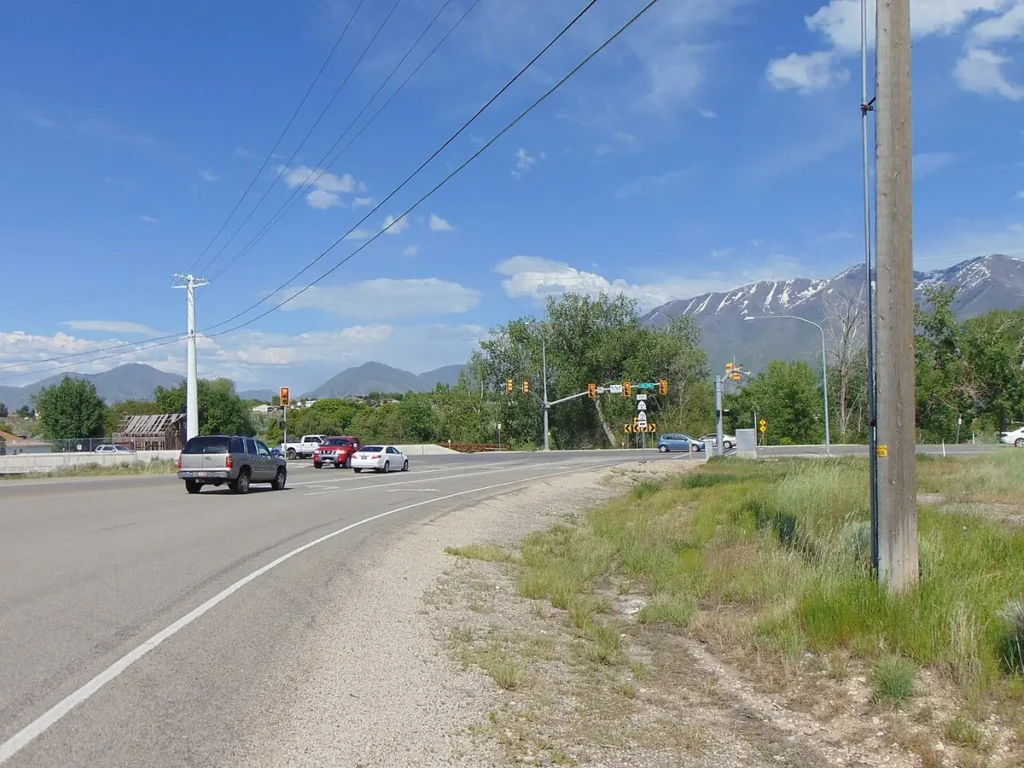
Many residents travel along Main St/US-6 and connecting roads toward Utah County job centers. Heavier traffic and more complex intersections are among the reasons coverage should be reviewed periodically, especially as the area continues to develop.
For emergencies and safety programs, the Spanish Fork Police Department and Fire & EMS are official city contacts-they are not affiliated with Utah Vehicle Insurance.
Sample Comparison: Pickup + Family Car + Camp Trailer
This hypothetical example is clearly illustrative-not a quote. Imagine a Spanish Fork household with two adults, a teen driver, a half-ton pickup used for commuting and weekend projects, a compact sedan for errands, and a camp trailer used several weekends each summer.
|
Minimum Legal Setup |
Balanced Family Setup |
Higher-Protection Setup |
|
|---|---|---|---|
|
Liability |
30/65/25 |
100/300/100 |
250/500/100 |
|
PIP |
$3,000/person |
$3,000/person |
$5,000+ if available |
|
UM/UIM |
Signed rejection or legally permitted lower limits |
Matches liability if available |
Matches liability if available |
|
Collision (Pickup) |
None (unless lender requires) |
$1,000 deductible |
$500 deductible |
|
Collision (Sedan) |
None |
$1,000 deductible |
$500 deductible |
|
Comprehensive |
None |
Both vehicles |
Both vehicles |
|
Camp Trailer |
Not specifically covered |
Listed, liability only |
Listed with physical damage |
Actual rates depend on driving history, vehicles, garaging, credit-based factors where allowed, and more. No rate or savings is guaranteed. Request a personalized quote to see real options for your household today.
Optional Coverages Spanish Fork Drivers Often Consider
Beyond Utah’s minimum car insurance, here are add-ons worth discussing with your agent:
-
Higher liability limits to protect your home, savings, and future income
-
Collision and comprehensive on pickups, newer vehicles, and financed cars
-
Roadside assistance, especially valuable for vehicles that tow trailers
-
Rental reimbursement subject to daily and total limits while yours is repaired after a covered claim
-
Full glass coverage where offered, to handle windshield chips from road debris
-
UM/UIM at higher limits to protect your family when an at-fault driver carries too little or no insurance
Remember, “full coverage” is not a standard legal term. On our full coverage page, you can learn how liability, collision, and comprehensive work together. When working with a budget, prioritize collision and comprehensive on the vehicle you could least afford to replace out of pocket.
SR-22, Non-Owner Policies, and Special Situations in Spanish Fork
Some drivers in Spanish Fork, UT need help after license issues, or need coverage when they drive but do not own a car.
-
SR-22 filings: An SR-22 is a form your insurer files with the Utah Driver License Division (DLD), usually required after certain serious violations or suspensions. The DLD determines if and how long it is required-typically three years from the conviction date, with the specific notice controlling. An SR-22 is not a separate policy type, and it is not automatically required for ordinary speeding tickets. See our SR-22 insurance page for more information.
-
Non-owner insurance: This option is for eligible drivers who do not own a vehicle and do not have regular access to a household car. It typically covers liability only-not physical damage-when you occasionally rent or borrow a car. It usually does not apply to vehicles owned by you or regularly available in your household, and generally excludes delivery or rideshare use. Details are on our non-owner insurance page.
Call Utah Vehicle Insurance to see which options may apply in your situation.
How Claims and Repairs Work After a Crash in Utah
After a crash in Spanish Fork, you may work with your own insurer (first-party claim) or the other driver’s insurer (third-party claim). Here is what to expect based on Utah Insurance Department guidance:
-
For third-party claims, insurers must provide a substantive response within 15 days of a request for response and generally accept or deny the claim within 30 days, with additional time allowed when an investigation cannot be completed.
-
Utah uses comparative negligence: you can recover damages only if you are less than 50% at fault, with your recovery reduced by your percentage of fault.
-
You generally may choose your own repair shop, but you may owe costs above the insurer’s estimate. Written disclosure is required if non-OEM parts are used.
-
Claiming against the at-fault driver’s liability coverage typically involves no deductible on your end. Using your own collision coverage means paying your chosen deductible, with possible later reimbursement.
Questions about registration and proof of insurance can be researched through the Utah DMV. Keep evidence of insurance with you to present to law enforcement when required.
Working With an Insurance Agent for Utah Vehicle Insurance from Spanish Fork
Drivers Insurance Agency, Inc., doing business as UtahVehicleInsurance.com, serves Spanish Fork drivers as a service area-there is no physical office in the city, and the business is independent, not part of any Utah government agency.
Here is how it works:
-
Contact us by phone at (844) 409-1313 or through the quote form.
-
An agent follows up to clarify your vehicles and usage, including pickups, trailers, and any work use.
-
We present available options from participating companies so you can compare coverage and cost side by side.
Coverage is not active until an insurer approves the application and the start date is confirmed. We do not promise the cheapest rate in Spanish Fork or guarantee savings. The goal is to offer clear options so you can choose what fits your needs, budget, and the way you actually live and drive.
Frequently Asked Questions: Spanish Fork, Utah Car Insurance
Do I need to list my college student who only drives when home in Spanish Fork?
Insurers usually want to know about household members who might drive insured cars, even if they attend school in Provo or another city. Your agent can help decide whether to rate, exclude, or list them as an occasional driver based on their actual access to your vehicles. Leaving them off without a formal exclusion could create a gap if they are involved in a crash while home.
Will my personal auto policy cover me if I use my pickup for side jobs around town?
It depends on the type and frequency of the work. Occasional unpaid favors are different from regular paid hauling or deliveries. Describe your side jobs honestly to your agent so they can determine whether a personal or commercial policy is appropriate. Misrepresenting use can lead to denied claims.
Is my small trailer automatically covered when I lend it to a neighbor?
Liability in a crash typically follows the towing vehicle’s policy, while physical damage to the trailer itself depends on how it is insured on your policy. Lending trailers can raise complex questions-review the arrangement with your agent before problems arise, not after.
Can I get by with Utah’s minimum limits if I mostly drive on city streets in Spanish Fork?
The 30/65/25 minimum is legal but may not be enough to cover serious accidents, especially with today’s vehicle repair and medical costs. Many families choose higher limits to protect income, savings, and their home even when they rarely leave town.
How do I check the status of my license or an SR-22 requirement in Utah?
License status and SR-22 requirements are handled by the Utah Driver License Division. Follow DLD instructions or contact the Division directly, then share any notices with your insurance agent so the correct filing can be arranged.
Sources and Helpful Links
-
Utah Insurance Department – Third-party auto claim and minimum coverage guidance: https://insurance.utah.gov/consumers/auto/third-party-auto-claim/
-
Utah DMV – Registration and proof-of-insurance information: https://dmv.utah.gov/register/insurance/
-
Utah Driver License Division – License status, SR-22 requirements, driver records: https://dld.utah.gov/
-
Spanish Fork City – Traffic safety reviews and transportation planning: https://www.spanishfork.gov/business-development/traffic/
-
Spanish Fork Police Department: https://www.spanishfork.gov/law-and-public-safety/police/
-
Spanish Fork Fire & EMS: https://www.spanishfork.gov/law-and-public-safety/fire-ems/
These are official public resources and are not affiliated with Utah Vehicle Insurance.